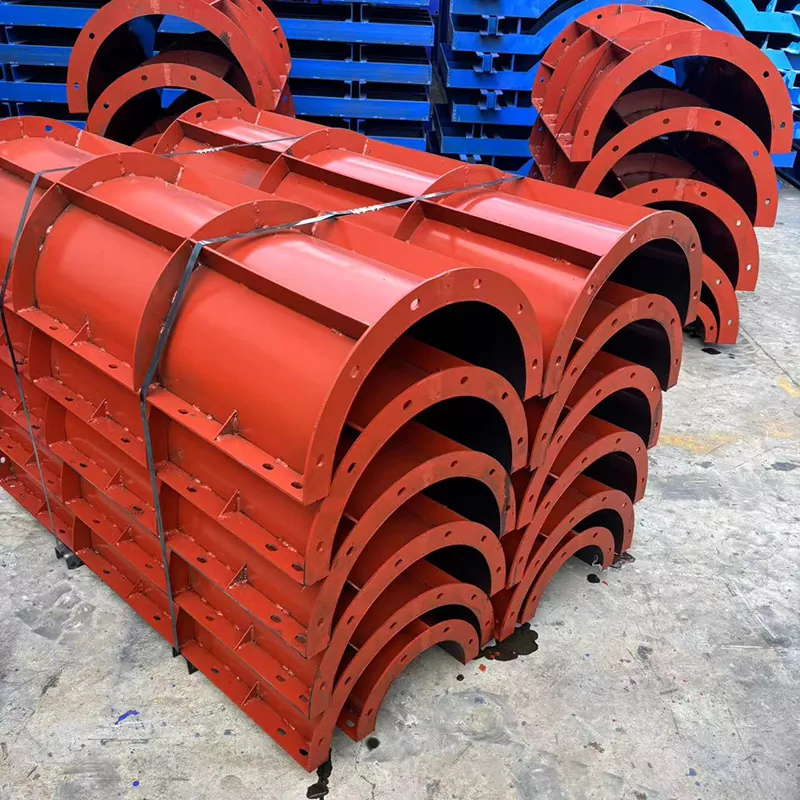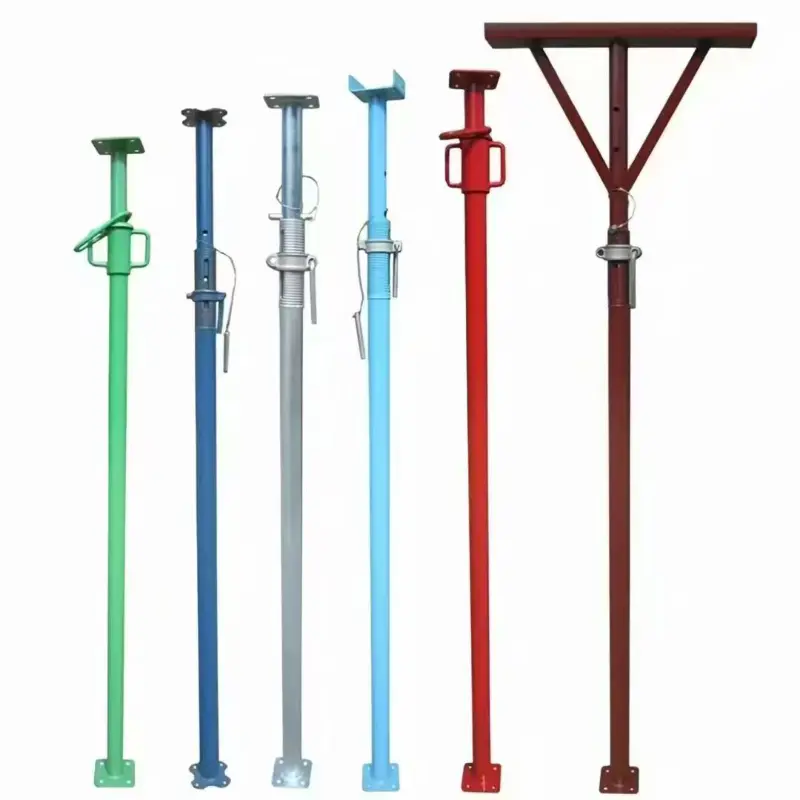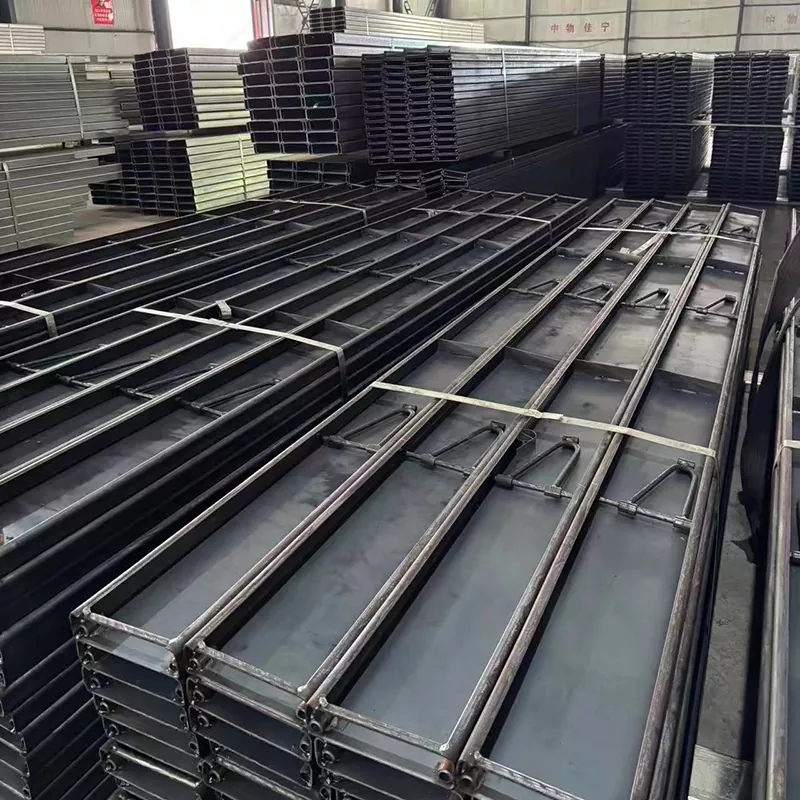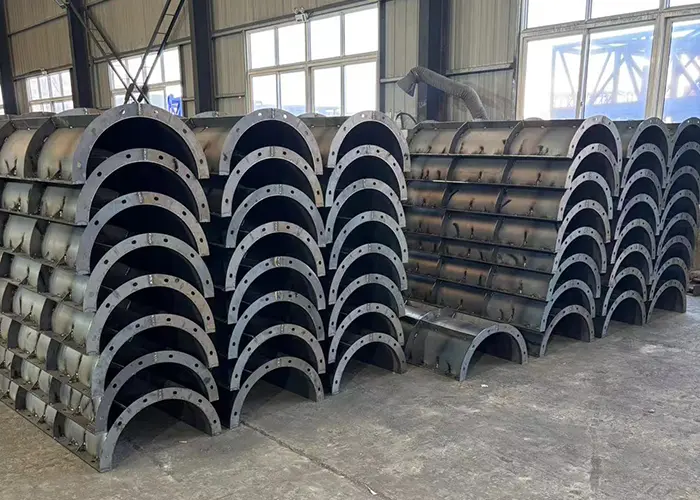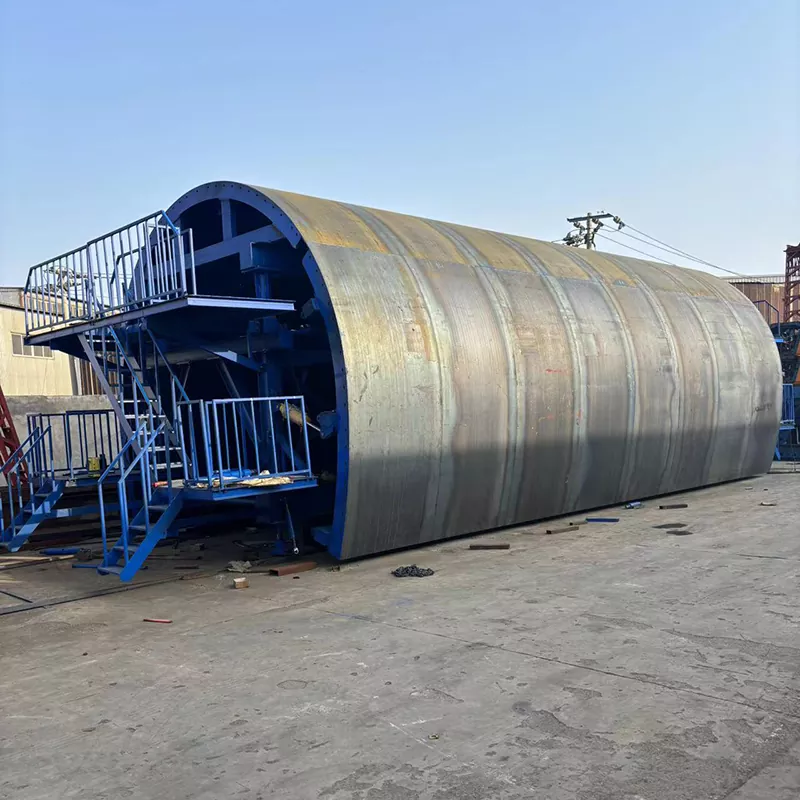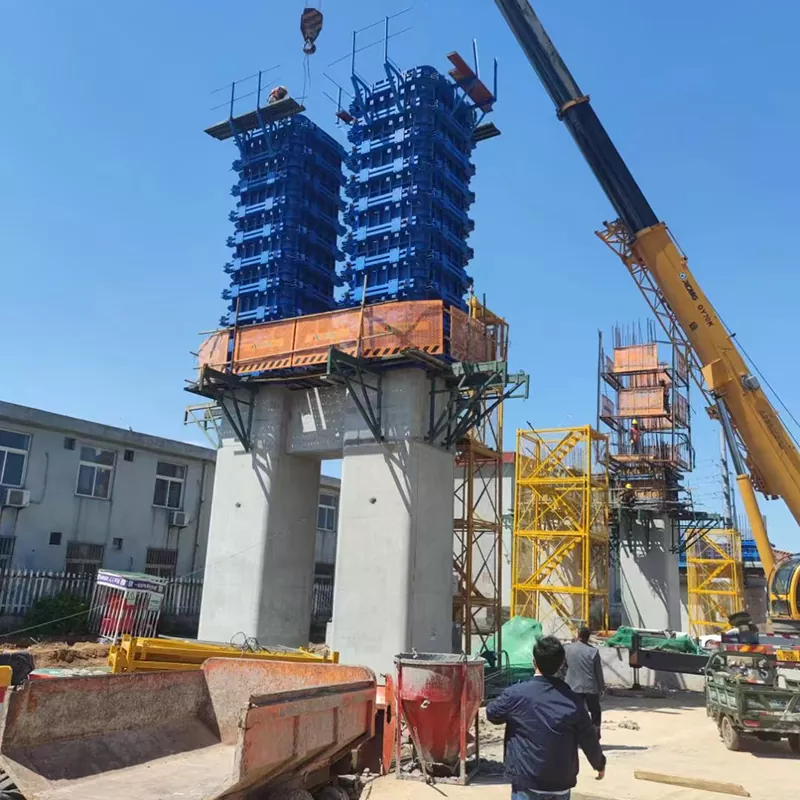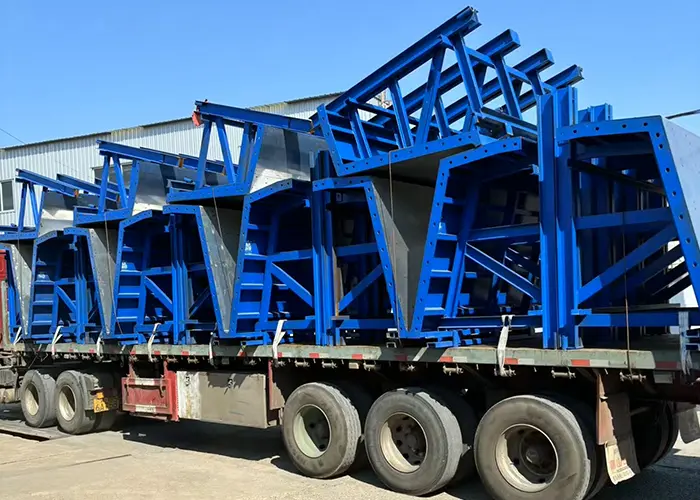
Concrete curbs may appear to be simple roadside structures, but producing straight edges, consistent heights, clean corners, and durable surfaces requires careful planning and reliable forming equipment. For road contractors, infrastructure developers, and construction material buyers, Curb Steel Formwork offers a practical solution for controlling concrete geometry while improving construction efficiency and repeatability.

Curb Steel Formwork is a reusable steel forming system designed to shape concrete curbs and related edge structures. Its rigidity, dimensional consistency, and adaptability make it suitable for municipal roads, highways, parking areas, industrial facilities, and landscape projects. Selecting the right system involves evaluating curb dimensions, steel quality, connection methods, surface protection, installation requirements, and expected reuse cycles. Proper installation and maintenance help contractors reduce alignment errors, concrete leakage, rework, and long-term operating costs.
Table of Contents
- What Is Curb Steel Formwork?
- Why Does Curb Formwork Matter in Road Construction?
- Key Benefits of Using Steel Curb Formwork
- Where Is Curb Steel Formwork Commonly Used?
- How to Select the Right Curb Steel Formwork
- Installation Guide: From Preparation to Concrete Placement
- Common Construction Problems and Practical Solutions
- Steel Formwork vs. Timber Formwork
- Maintenance Tips for Longer Service Life
- How to Evaluate the Total Cost of Ownership
- Frequently Asked Questions
- Find a Suitable Curb Steel Formwork Solution
1. What Is Curb Steel Formwork?
Curb Steel Formwork is a temporary forming system used to hold fresh concrete in a predetermined shape until it has developed sufficient strength to maintain that shape independently. It generally consists of steel forming panels, connecting components, stakes or anchors, and supporting elements selected according to the design and construction method.
During construction, the forms establish the curb's height, width, alignment, edge profile, and overall geometry. After the concrete reaches the required condition for safe stripping, the forms are removed, cleaned, and prepared for another placement cycle.
Unlike improvised forming arrangements, purpose-designed steel systems can provide repeatable dimensions and consistent connections across successive sections. This is particularly valuable on projects where hundreds or thousands of meters of curb must follow the same design specifications.
How Does the System Work?
The process begins with setting out the required curb line and elevation. Steel forms are then positioned and secured on the prepared base. Once the dimensions, joints, and supports have been checked, concrete is placed into the formed area. The formwork resists the lateral pressure and placement forces associated with fresh concrete while maintaining the intended profile.
After sufficient concrete strength has developed, the forms are carefully removed. The finished curb is inspected, and the steel components are cleaned before reuse.
2. Why Does Curb Formwork Matter in Road Construction?
Concrete curb construction requires more than simply containing wet concrete. Curbs often define the boundaries between traffic lanes, sidewalks, drainage channels, landscaped areas, and parking spaces. Errors in their geometry can affect adjacent pavement work, water management, accessibility, and the finished appearance of a project.
Accurate Dimensions and Alignment
Stable steel forms help maintain consistent curb heights, straight runs, and specified cross-sectional profiles. Reliable alignment also simplifies the construction of adjoining surfaces and reduces the likelihood of corrective work.
Better Concrete Surface Quality
Clean, properly maintained forming surfaces can produce uniform concrete faces. Tight joints help limit the loss of cement paste, while adequate support reduces movement that could create visible irregularities. Concrete mix design, placement, consolidation, finishing, and curing remain equally important to the final result.
More Predictable Construction Scheduling
Reusable forms allow crews to move equipment from one section to another without rebuilding the entire forming arrangement. When the project includes repetitive curb profiles, this can make work sequences easier to organize and improve the utilization of labor and materials.
Reduced Rework and Material Waste
Incorrectly positioned forms can lead to dimensional deviations, uneven edges, and concrete leakage. These problems may require patching, grinding, or removal and replacement. A properly selected and installed forming system helps reduce such risks before concrete placement begins.
3. Key Benefits of Using Steel Curb Formwork
3.1 Rigidity Under Construction Loads
Steel provides a rigid forming surface when the panel thickness, reinforcement, supports, and connections are appropriately designed. This rigidity helps resist deformation caused by fresh concrete, vibration, and normal site handling. Actual performance depends on the complete system rather than the material alone.
3.2 Reusability Across Multiple Projects
Steel curb forms can be cleaned and reused when they remain within acceptable dimensional and structural condition. Reuse is particularly beneficial for contractors who regularly complete road, sidewalk, parking lot, and municipal infrastructure work.
3.3 Consistent Finished Profiles
Manufactured steel panels provide a repeatable reference for curb dimensions. When joints are properly aligned and the system is correctly anchored, crews can achieve more consistent results across successive concrete placements.
3.4 Flexible Configuration
Modular systems can support repetitive straight sections, while specially designed components may be required for curved alignments, variable heights, intersections, or unusual cross-sections. Customization should be based on approved drawings and actual site requirements.
3.5 Improved Long-Term Resource Efficiency
Repeated use can reduce dependence on disposable forming materials. Fewer replacement materials and less waste may also simplify site organization. These advantages are strongest when the forms are durable, easy to handle, and maintained between uses.
- Consistent forming geometry for repetitive curb construction.
- Potential reductions in replacement material and fabrication work.
- Reusable components that support organized construction cycles.
- Adaptability to different project layouts when the correct components are selected.
- Less dependence on improvised forming arrangements.
4. Where Is Curb Steel Formwork Commonly Used?
Different infrastructure projects place different demands on curb formwork. Selecting a system according to its intended application helps ensure that the forming profile, support arrangement, and installation method match the work.
Municipal Roads and Urban Streets
Urban road projects use concrete curbs to define road edges, separate traffic and pedestrian areas, and integrate sidewalks with drainage infrastructure. Dimensional consistency is especially important where multiple trades work along the same alignment.
Highways and Intersections
Highway ramps, traffic islands, roundabouts, and intersections may include straight sections, tight radii, and transitions between different curb profiles. Projects with complex geometry may require dedicated curved or special-shaped formwork components.
Parking Lots and Industrial Facilities
Commercial parking areas, logistics centers, factories, and warehouses often require repeated curb sections around pavement edges, loading zones, equipment areas, and drainage boundaries. Reusable steel systems can be valuable when the same profiles appear throughout the site.
Parks, Residential Developments, and Landscaping
Landscape projects use curbs to separate planting beds, pathways, lawns, and paved areas. Curved alignments and appearance requirements may influence the choice of panel length, bending configuration, and connection details.
Drainage and Pavement Edge Structures
Combined curb-and-gutter profiles and related edge structures require close coordination between formwork dimensions and the drainage design. The forms must accommodate the specified cross-section and maintain the intended elevations and slopes.
5. How to Select the Right Curb Steel Formwork
Purchasing decisions should begin with the engineering requirements rather than price alone. A formwork system that does not match the curb profile, placement conditions, or site installation method may create additional labor and rework costs.
5.1 Confirm Dimensions and Geometry
Prepare the required curb height, width, profile, panel length, curve radius, and any transition details. For non-standard applications, provide approved drawings or CAD files so the supplier can assess the required configuration.
5.2 Evaluate Steel Quality and Structural Design
Ask about the specified steel grade, plate thickness, stiffening arrangements, weld quality, and connection details. These specifications should be suitable for the anticipated concrete pressure, support spacing, handling loads, and construction sequence.
5.3 Check Joint and Connection Performance
Connections should hold adjacent panels in alignment and resist movement during placement. Review the ease of assembly, availability of replacement hardware, and compatibility of components across the proposed system.
5.4 Review Surface Protection
Steel formwork may be supplied with an appropriate protective coating or other surface treatment. Consider the storage environment, frequency of use, exposure to moisture, and maintenance requirements when comparing available finishes.
5.5 Consider Handling and Site Productivity
Panel weight, lifting arrangements, storage space, and assembly procedures all affect day-to-day usability. A suitable system should fit the contractor's available workforce, equipment, and planned placement sequence.
| Evaluation Item | What to Confirm | Why It Matters |
|---|---|---|
| Dimensions | Curb profile, height, width, panel length, and radius | Ensures compatibility with design drawings |
| Steel construction | Material grade, thickness, stiffeners, and welds | Helps maintain stability under construction loads |
| Connections | Joint fit, locking components, and adjustment method | Supports alignment and limits paste leakage |
| Surface treatment | Coating type, corrosion protection, and cleaning needs | Influences maintenance and service life |
| Customization | Curved sections, transitions, and special profiles | Addresses project-specific geometry |
| Supplier support | Drawings, technical specifications, and spare parts | Reduces purchasing and installation uncertainty |
Before placing an order, request the technical drawings, material specifications, surface treatment details, packing information, and applicable inspection records. Confirm the required delivery schedule and replacement component availability, particularly for projects with tight construction deadlines.
6. Installation Guide: From Preparation to Concrete Placement
Correct installation is essential to obtaining the expected performance from curb steel formwork. The following workflow provides a practical starting point, but project specifications and the manufacturer's installation instructions must take precedence.
-
Prepare the base and verify the setting-out lines.
Remove loose material, check the supporting surface, and establish the required alignment and elevation using suitable surveying equipment. Confirm that the prepared base meets the project requirements before installing the forms.
-
Position and connect the steel panels.
Place each panel along the specified line and connect adjacent sections using the designated hardware. Check joint fit and ensure that the forming faces are aligned without unintended gaps or offsets.
-
Install anchors and bracing.
Secure the forms using suitable stakes, braces, or other specified supports. Support spacing must be appropriate for the system design and anticipated placement forces. Do not rely on the panel's rigidity alone to prevent movement.
-
Inspect dimensions before pouring.
Verify curb width, height, elevation, straightness, curve radius, joint details, and the position of any specified reinforcement or embedded components. Correct discrepancies before concrete placement begins.
-
Apply release agent where appropriate.
Use a compatible form-release product according to the manufacturer's instructions. Apply it uniformly and avoid contaminating reinforcement, joints, or adjoining surfaces where bonding is required.
-
Place and consolidate the concrete carefully.
Follow the approved concrete mix and placement method. Avoid uncontrolled discharge, excessive vibration, or other practices that could displace the forms or cause segregation. Monitor the form line during the pour.
-
Strip, inspect, and clean the forms.
Remove the forms only when the concrete has sufficient strength to retain its shape and stripping is permitted by the project requirements. Release the panels carefully to prevent damage, then clean and inspect them before the next use.
7. Common Construction Problems and Practical Solutions
Even well-manufactured formwork can produce poor results if it is incorrectly selected, installed, or maintained. Identifying common problems early helps crews avoid unnecessary corrective work.
| Common Problem | Possible Cause | Recommended Action |
|---|---|---|
| Uneven curb alignment | Incorrect setting-out, loose anchors, or movement during pouring | Recheck the line and grade, improve support, and inspect during placement |
| Concrete paste leakage | Gaps at panel joints or poor connections | Clean mating surfaces and correct joint fit before pouring |
| Bulging or distorted profiles | Inadequate stiffness, support, or unsuitable placement conditions | Review system capacity and bracing with the responsible technical team |
| Rough or honeycombed surfaces | Inadequate consolidation, unsuitable concrete, or leakage | Review the concrete mix, placement procedure, and joint condition |
| Difficulty removing forms | Concrete buildup, unsuitable release agent, or premature bonding | Clean panels, use a compatible release agent, and follow stripping requirements |
| Premature corrosion | Damaged coating, prolonged moisture exposure, or poor storage | Inspect the surface, repair protection as appropriate, and improve storage |
It is important to distinguish formwork-related defects from problems originating in the concrete mix, subgrade, finishing process, or curing conditions. A systematic inspection of the entire construction process is more effective than changing the forming equipment without identifying the underlying cause.
8. Steel Formwork vs. Timber Formwork
Steel and timber can both be used for concrete curb construction, but their practical advantages differ. The best choice depends on project size, the number of repeated placements, the required geometry, the available budget, and site labor conditions.
| Comparison Factor | Steel Formwork | Timber Formwork |
|---|---|---|
| Dimensional consistency | Can provide repeatable dimensions when manufactured and maintained correctly | Depends heavily on cutting accuracy and material condition |
| Repeated use | Well suited to repetitive work when inspected and maintained | Reuse is possible but may be limited by wear, moisture, and damage |
| Initial investment | Generally higher for purpose-made systems | Often lower for small or one-off jobs |
| Customization on site | May require compatible accessories or specially fabricated components | Can be cut and adapted relatively easily for unusual details |
| Maintenance | Requires cleaning, joint inspection, and corrosion protection | Requires inspection for warping, splitting, and moisture damage |
| Best-fit applications | Repeated curb profiles and projects prioritizing consistent geometry | Small jobs, irregular one-off work, or projects with limited reuse needs |
For contractors working on recurring road and infrastructure projects, reusable steel curb formwork can offer strong long-term value. Timber may remain appropriate for isolated sections or unusual shapes where fabrication flexibility is more important than repeated use. The decision should be based on total project requirements rather than material preference alone.
9. Maintenance Tips for Longer Service Life
Regular maintenance helps preserve panel geometry, connection performance, and surface condition. It also allows contractors to identify damage before it affects the next concrete placement.
Clean Immediately After Use
Remove residual concrete before it hardens excessively. Use cleaning methods that do not damage the steel surface, protective coating, welds, or connection hardware. Avoid uncontrolled impact that could bend the panels.
Inspect Structural Components
Check panel faces, edges, welds, stiffeners, locks, and fasteners for visible deformation, cracking, looseness, or excessive wear. Components with damage that may affect safe use should be removed from service until appropriately assessed and repaired.
Protect Against Corrosion
Inspect painted or coated surfaces and address damage using an appropriate repair method. Where practical, keep the equipment dry and away from standing water, corrosive substances, and prolonged ground contact.
Store Components Correctly
Stack forms on a stable, level surface using a suitable arrangement that prevents bending and accidental movement. Keep accessories organized and protect components during transportation to reduce loss and handling damage.
Maintain a Reuse Record
For larger fleets, record inspections, repairs, coating maintenance, and any dimensional changes. A simple tracking system helps purchasing and site management teams determine when components should be repaired or replaced.
10. How to Evaluate the Total Cost of Ownership
The purchase price of curb steel formwork is only one part of its economic value. Contractors should consider how the system affects installation labor, concrete quality, repair work, transportation, storage, maintenance, and future reuse.
A useful starting point is to calculate the estimated cost per successful use:
This calculation is a simplified comparison tool rather than a complete project-cost model. Labor, installation time, replacement parts, and the financial impact of defects should also be considered when comparing suppliers or forming methods.
For example, a more expensive system may provide better value if it remains dimensionally reliable over many placements and reduces the need for replacement materials. Conversely, a highly specialized system may not be economical for a small project with little prospect of reuse.
To make a fair purchasing comparison, request quotations based on the same panel dimensions, accessories, material specifications, surface treatment, packaging requirements, and delivery terms. This allows the project team to compare the actual scope of supply rather than headline prices alone.
11. Frequently Asked Questions
Q1. What is Curb Steel Formwork used for?
Curb Steel Formwork is used to shape freshly placed concrete into specified curb profiles. Typical applications include municipal roads, highways, sidewalks, parking lots, industrial sites, drainage edges, and landscape boundaries.
Q2. Can curb steel formwork be reused?
Yes. Reuse is one of the main advantages of steel formwork. The number of successful uses depends on material quality, structural design, handling, cleaning, storage, and maintenance. Buyers should request product-specific guidance rather than assume a fixed reuse count.
Q3. Can steel curb formwork be customized for curved roads?
Many forming systems can accommodate curved alignments through suitable curved panels, segmented arrangements, or specially fabricated components. The required radius, curb profile, transition geometry, and installation method should be confirmed before production.
Q4. What information should buyers provide when requesting a quotation?
Provide curb height and width, cross-sectional drawings, panel lengths, curve radii where applicable, required steel specifications, surface treatment preferences, estimated quantities, project location, and expected delivery date. CAD drawings and site-specific requirements can help clarify the scope.
Q5. How can concrete leakage at formwork joints be reduced?
Ensure that mating surfaces are clean, joints fit correctly, and connections are secured. Inspect the assembled forms before pouring and correct gaps or damaged components. Joint sealing should follow the system design and project requirements.
Q6. What determines the appropriate steel plate thickness?
Plate thickness depends on the formwork design, panel dimensions, stiffening arrangements, support spacing, fresh concrete pressure, and construction loads. The required specification should be confirmed through the manufacturer's technical information and applicable engineering requirements.
Q7. How long should curb steel formwork remain in place?
Stripping time depends on concrete strength development, mix characteristics, temperature, curing conditions, curb geometry, and project specifications. Follow the approved construction procedure and applicable requirements; do not remove forms solely according to a universal time estimate.
Q8. How can buyers compare different curb steel formwork suppliers?
Compare technical drawings, material specifications, manufacturing quality, connection design, surface treatment, customization capabilities, inspection documentation, delivery arrangements, and after-sales support. Confirm that the quoted system meets the project's actual forming requirements.
12. Final Considerations for Successful Curb Construction
High-quality curb construction depends on the interaction of formwork design, site preparation, installation accuracy, concrete placement, and maintenance. Choosing a suitable steel forming system helps contractors establish consistent geometry and manage repetitive work more efficiently, but equipment selection must always be supported by correct engineering and sound construction practices.
Before purchasing, confirm the required dimensions, connection details, structural specifications, surface protection, and customization needs. During construction, prioritize accurate setting-out, secure supports, pre-pour inspections, controlled placement, and appropriate stripping procedures. After use, clean and inspect the equipment to preserve its condition for subsequent projects.
For contractors, distributors, and infrastructure project buyers, a well-matched Curb Steel Formwork solution can contribute to more predictable operations, less avoidable rework, and better long-term equipment value.
Looking for a Reliable Curb Steel Formwork Supplier?
Tianjin Xinhuixing International Trade Co., Ltd. provides steel formwork solutions for construction and infrastructure applications. When planning your next road, highway, parking area, or municipal engineering project, selecting the right formwork configuration is an important step toward achieving accurate concrete profiles and efficient site operations.
Whether you need standard curb steel formwork or a project-specific configuration, prepare your drawings, dimensions, quantity requirements, and delivery schedule to help identify a suitable solution for your application.
Ready to discuss your project requirements? Please contact us to inquire about curb steel formwork specifications, customization possibilities, and quotation details. Our team can review your requirements and help you move toward a practical forming solution for your construction project.