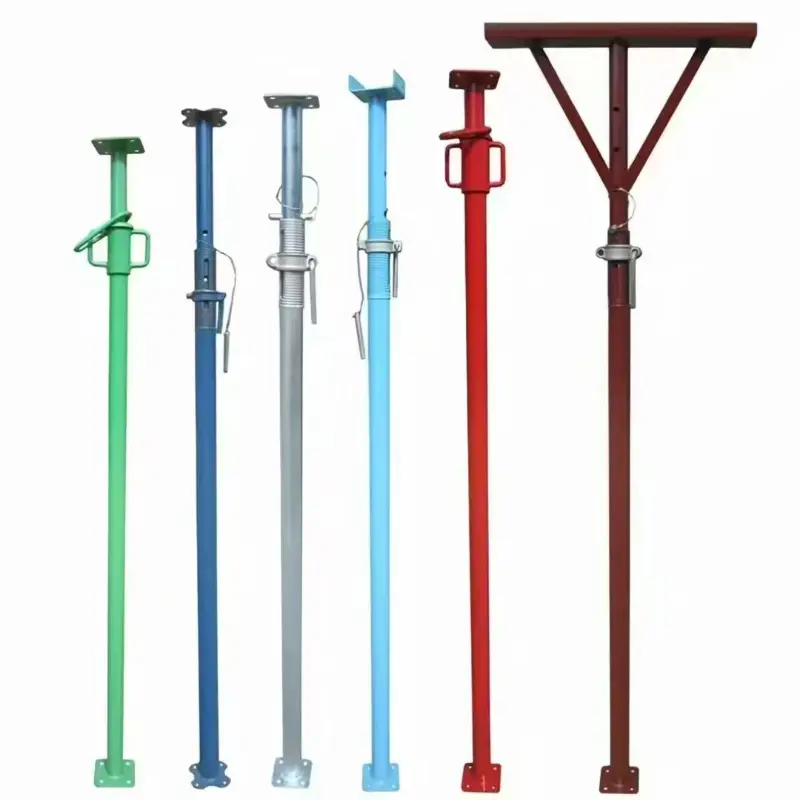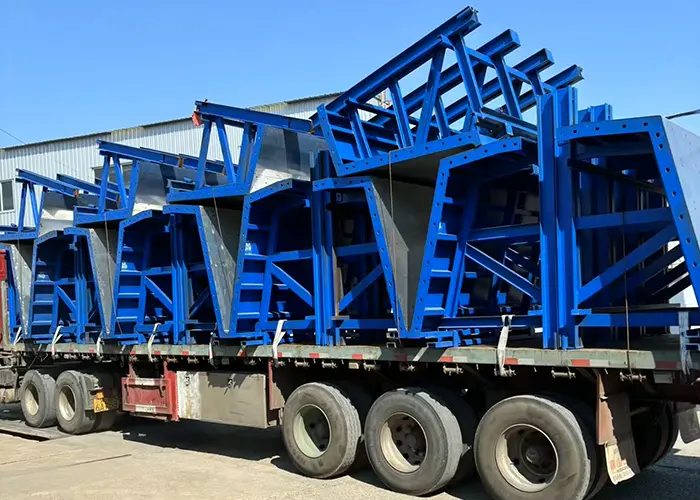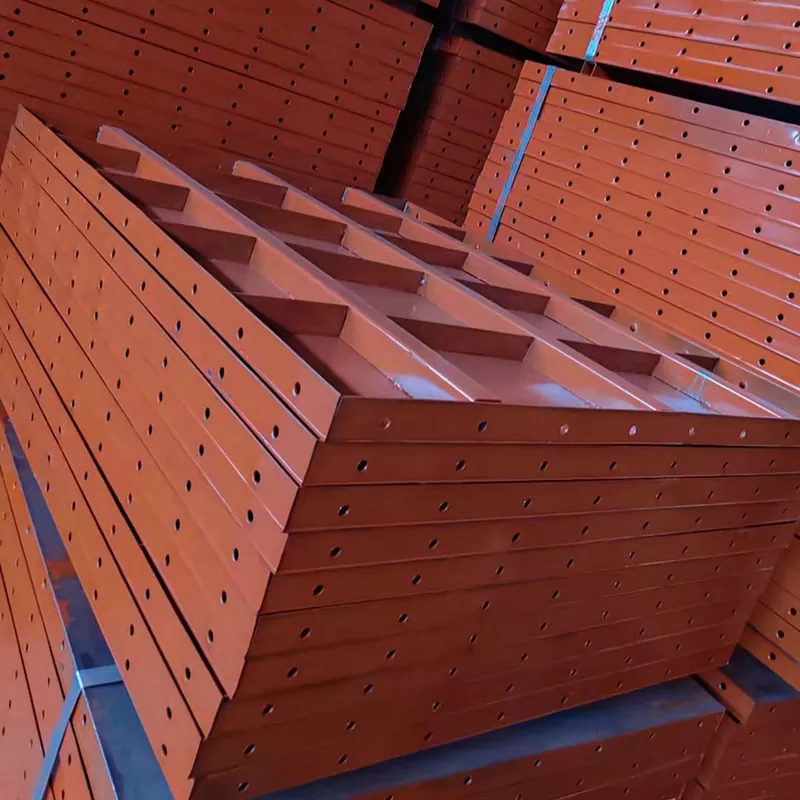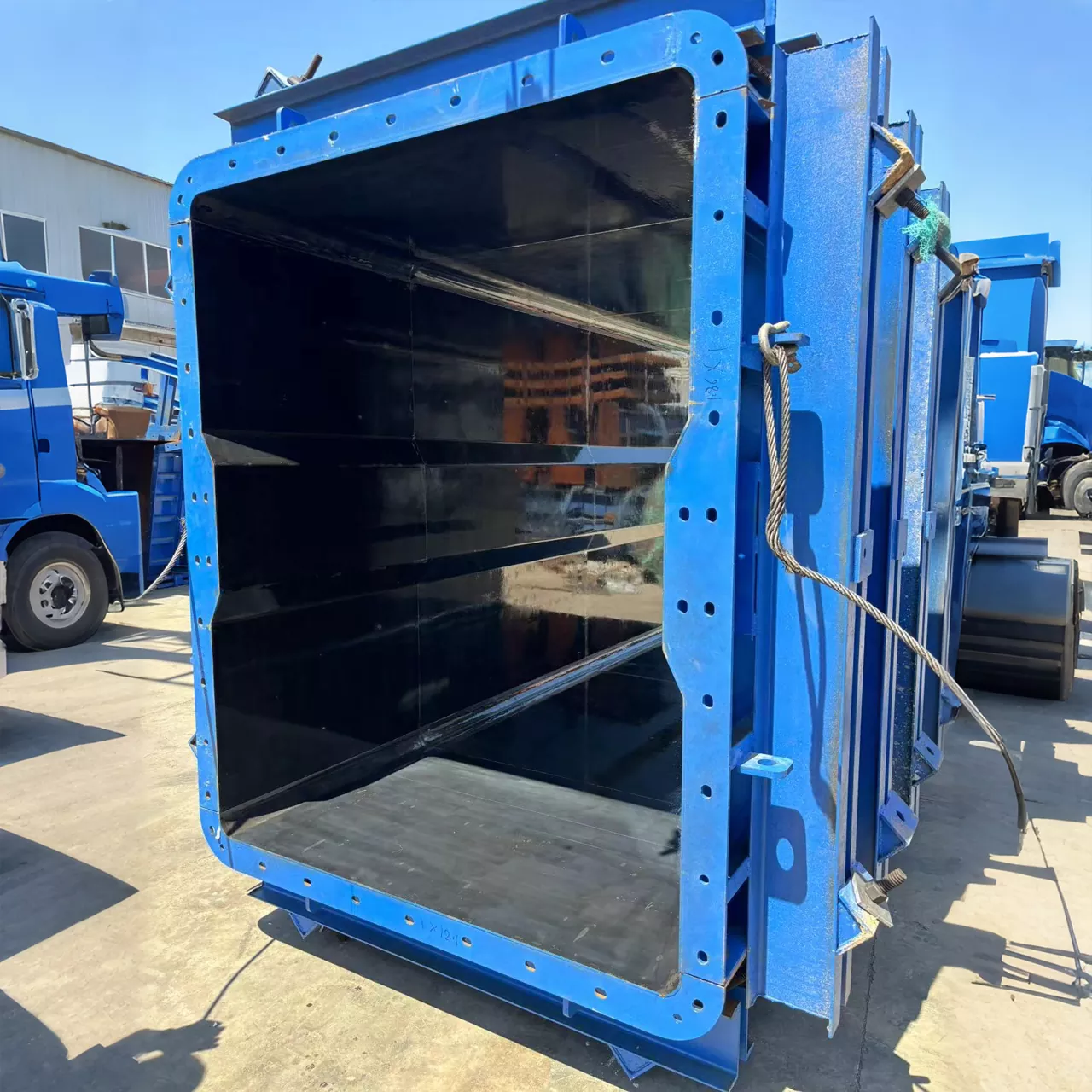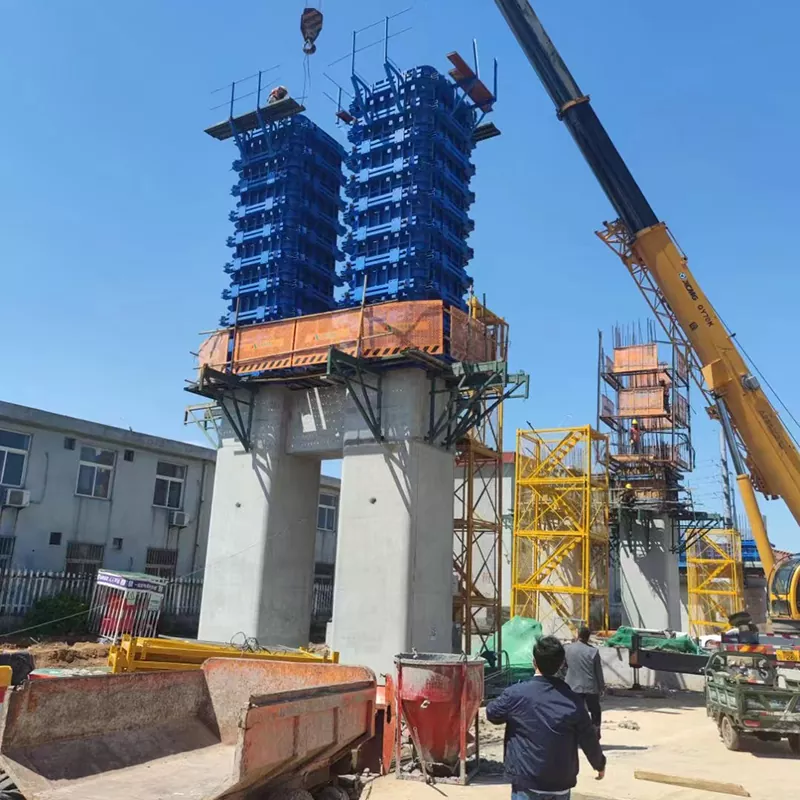
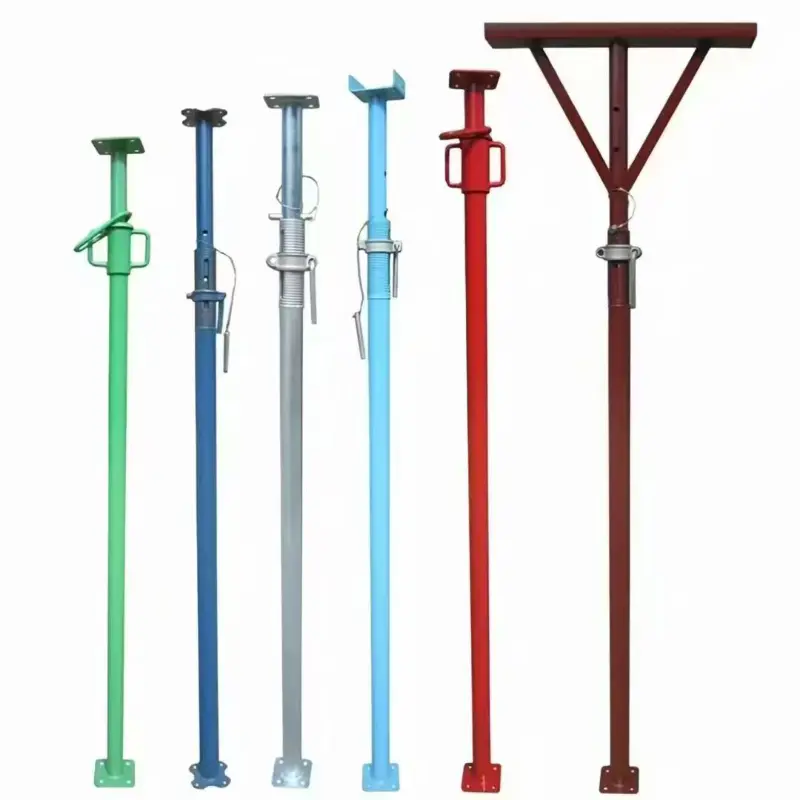
A Construction Steel Prop is a temporary vertical support component used when slabs, beams, formwork, prefabricated elements, or existing structures need controlled support during a construction stage. Its telescopic arrangement combines an inner tube, outer tube, adjustment mechanism, top contact point, and base contact point so the working height can be established according to site conditions. The practical value is not simply the ability to “hold something up”; the real purpose is to transfer temporary loads through a controlled support path while allowing installation teams to work with changing elevations and different structural arrangements.
- 1. Why Temporary Support Needs More Than a Fixed Post
- 2. How Telescopic Support Transfers Temporary Loads
- 3. Which Components Matter During Installation?
- 4. Where Adjustable Support Is Most Useful
- 5. How Should the Correct Prop Be Selected?
- 6. What Should a Proper Installation Sequence Look Like?
- 7. How Can Reusable Props Be Checked and Maintained?
- 8. Which Common Practices Should Be Avoided?
- 9. Adjustable Support Versus Fixed-Length Members
- 10. How Does Temporary Support Fit Into Project Planning?
- 11. Frequently Asked Questions
Why Temporary Support Needs More Than a Fixed Post
Construction conditions rarely remain identical from one floor, room, or installation stage to another. A support location that works below one slab may not suit another area because the clear height, supported geometry, access conditions, or temporary loading arrangement is different.
Fixed-length members can provide a straightforward vertical load path when the required dimension is known and stable. Construction work, however, often demands a support that can be adjusted without cutting, welding, or replacing the entire member. A telescopic support addresses this practical problem by allowing the installer to establish an approximate height and then make finer mechanical adjustments.
The distinction is important because temporary support is part of a changing construction sequence. During formwork installation, for example, the supporting system has to be positioned before concrete is placed. During renovation, support may need to remain in place while an existing beam or slab is opened for inspection or reinforcement. During prefabricated installation, a temporary support may help stabilize an element until permanent connections are complete.
The correct way to view an adjustable prop is therefore as one component within a temporary support arrangement. Its performance depends not only on the member itself, but also on how it is positioned, what it supports, how the load reaches the base, how many props are used, what spacing is adopted, and whether the supporting surfaces can carry the imposed reactions.
How Telescopic Support Transfers Temporary Loads
The basic operating principle is simple but should not be confused with a guarantee of performance under every condition. The inner and outer steel tubes form the principal vertical member. The adjustment system establishes the working length, while the top and bottom contact areas create interfaces between the prop and the supported or supporting surfaces.
1. Establishing the working height
The outer tube provides the main envelope while the inner tube slides within the assembly. Adjustment holes, locking components, and a threaded mechanism can be used together to establish the required position. Coarse adjustment brings the prop close to the desired dimension, while fine adjustment allows the support to be brought into firm contact with the supported structure.
2. Creating a vertical load path
Once installed correctly, the supported element transmits temporary force toward the top of the prop. The load then travels through the connected steel components and down toward the base. The base transfers the reaction into the supporting surface. This is why the floor or underlying structure cannot be treated as an afterthought.
3. Maintaining alignment
A support member is most effective when its intended compression force follows the designed axis. Poor alignment, uneven bearing, damaged threads, unstable bases, or excessive eccentricity can introduce conditions that differ significantly from the ideal vertical support scenario.
- Height: The installed length must remain within the specified adjustment range.
- Position: The support should be placed where the intended temporary load can reach the prop without uncontrolled offsets.
- Base: The lower contact area must bear on a suitable and stable surface.
- Top contact: The upper interface must support the supported member appropriately.
- Locking: Adjustment components must be correctly engaged before loading.
This sequence explains why a statement such as “the prop is strong” is incomplete. Temporary support performance is a system issue. Steel strength matters, but the geometry, adjustment mechanism, contact areas, installation method, and support conditions matter as well.
Which Components Matter During Installation?
A typical adjustable support uses several mechanical elements that work together. Their exact dimensions and configurations vary by product design, but the functional roles are broadly similar.
| Component | Primary role | What the installer should consider |
|---|---|---|
| Outer tube | Provides the main external structural body. | Check for deformation, corrosion, dents, and visible damage that could affect alignment or adjustment. |
| Inner tube | Provides telescopic extension for height adjustment. | Confirm smooth movement, suitable engagement, and absence of severe bending or damage. |
| Adjustment mechanism | Allows the support to reach the required working position. | Verify that the threaded and locking components operate correctly and are fully engaged. |
| Pin or locking component | Helps secure the coarse adjustment position. | Use the correct component and ensure it is properly seated before the support is loaded. |
| Top plate or head | Creates the upper contact interface. | Confirm that the supported element bears correctly on the head and that the interface is stable. |
| Base plate | Transfers the reaction to the floor or supporting structure. | Check bearing conditions, levelness, cleanliness, and the suitability of the underlying surface. |
These parts should not be evaluated in isolation. For instance, a clean and undamaged tube does not compensate for a damaged adjustment thread. Likewise, a correctly functioning screw mechanism cannot make an unstable base acceptable. A site inspection should therefore consider the entire assembly before it is placed into service.
Why connection details deserve attention
Temporary supports are often installed quickly because they are part of a larger construction sequence. That makes mechanical details easy to overlook. Pins should not be substituted with unrelated materials, threads should not be forced when they do not turn normally, and support plates should not be treated as decorative parts. Every interface contributes to how the temporary load reaches the ground or underlying structure.
A disciplined installation culture is especially valuable when a project uses a large number of props. Consistent procedures reduce the chance that one support will be adjusted differently from the rest or that a damaged component will be returned to service unnoticed.
Where Adjustable Support Is Most Useful
The strongest applications for telescopic temporary support are situations where structural conditions change while work is underway. The support can be adjusted to suit the required working height and then repositioned or reused as construction progresses.
Concrete slab and formwork support
Slab formwork requires a temporary support arrangement before concrete placement and through the relevant construction stage. Adjustable props can be positioned beneath formwork to establish vertical support at multiple locations. The exact number and spacing should come from the project design and the characteristics of the formwork system rather than from a generic spacing rule.
Beam support and localized propping
Beams may need temporary support during construction, reinforcement, modification, or repair. A telescopic prop can provide localized vertical support where a permanent structural connection is not yet available or where an existing member is being temporarily relieved during a controlled work sequence.
Prefabricated wall and component positioning
Prefabricated components may need temporary stabilization before bolts, welds, anchors, or other permanent connections are finalized. Adjustable support can help hold a component at the intended position while the permanent connection process takes place.
Renovation and structural reinforcement
Renovation creates conditions that differ from new construction. Existing structures can have irregular geometry, limited access, unknown local conditions, or temporary openings. A support that can be adjusted on site provides flexibility while repair or reinforcement work proceeds under an engineered temporary support plan.
Temporary bracing arrangements
In some construction environments, individual supports form part of a larger temporary arrangement involving several vertical or inclined components. The ability to adapt the height of the prop can simplify placement where floor levels or structural elevations vary.
Across all of these applications, the common requirement is controlled temporary support. The component is useful because it can be integrated into a planned support sequence rather than because it automatically makes an unsupported structure safe.
How Should the Correct Prop Be Selected?
Selecting an adjustable prop should begin with the actual support condition. Height is important, but it is only one part of the decision. A technically appropriate selection considers the working range, expected temporary load, support spacing, structural geometry, contact arrangement, environmental exposure, and the way the equipment will be handled on site.
- Define the required working height. Measure the actual distance between the supporting base and the intended top bearing position instead of estimating from floor plans alone.
- Confirm the adjustment range. The required working length should sit within the product's stated range and should not depend on extreme extension.
- Establish the expected temporary load. Consider the supported element, construction stage, temporary materials, equipment, and any applicable dynamic or construction-stage effects identified by the responsible engineer.
- Review the support spacing. A prop cannot be judged independently of the number and layout of support points. Spacing changes the load carried by each support.
- Check top and bottom interfaces. The support must make proper contact with the supported member and underlying surface.
- Consider the environment. Moisture, dust, cement residue, handling frequency, outdoor exposure, and storage conditions can affect maintenance requirements.
- Match the configuration to the application. Different projects may require independent supports, inclined supports, rear supports, or other configurations.
Height should not be the only specification
A common purchasing mistake is to ask only for a prop that reaches a certain height. Two supports with similar adjustment ranges may still behave differently because of their structural design, steel tube dimensions, mechanical details, head configuration, surface treatment, and intended working conditions.
Project requirements can change the configuration
Construction companies, formwork suppliers, distributors, and rental businesses may work across projects with different floor heights and support arrangements. Standard sizes are useful for routine work, while non-standard dimensions can be relevant when site geometry falls outside common configurations.
Customization should begin with confirmed technical requirements rather than an assumed “heavier is always better” approach. A longer component, for example, may introduce a different structural condition from a shorter one, even when both use the same basic steel-tube concept.
What Should a Proper Installation Sequence Look Like?
Installation should follow the project's temporary support design and the manufacturer's handling instructions. A consistent sequence helps reduce mistakes and makes inspection easier.
Step 1: Inspect before placement
Look for dents, excessive rust, bent tubes, damaged threads, missing locking components, distorted plates, and contamination that prevents proper engagement. Used equipment should receive special attention because repeated handling can hide damage beneath surface dirt or cement deposits.
Step 2: Prepare the bearing surface
The support should stand on a surface capable of receiving the reaction from the temporary load. Loose debris, uneven contact, weak local material, or unsuitable packing can create instability. Where additional bearing material or distribution plates are required by the temporary works design, they should be installed in accordance with that design.
Step 3: Position below the intended support point
The prop should be placed so the top and bottom interfaces remain properly aligned. Avoid creating unnecessary eccentricity simply because a convenient position is available. The support arrangement should match the planned load path.
Step 4: Make the mechanical adjustment
Coarse adjustment is commonly used to bring the prop close to the required height. The fine adjustment mechanism can then establish firm contact. The locking system should be fully engaged before the support is considered ready for service.
Step 5: Verify the complete arrangement
The final check should consider more than the individual prop. Review all support points, spacing, top contact, base contact, alignment, access conditions, and surrounding temporary structures. A correct individual component does not automatically create a correct system if the overall arrangement is incomplete.
How Can Reusable Props Be Checked and Maintained?
Reusability is one of the practical reasons steel temporary supports are widely used. Repeated use, however, requires inspection and proper storage. A prop should not return to service simply because it looked acceptable at the end of the previous project.
After removal
Remove cement residue, dirt, and other deposits that can interfere with moving or threaded parts. Inspect the inner and outer tubes for deformation. Check the adjustment system for abnormal resistance, damaged threads, or signs that components have been forced.
Before storage
Store supports in a way that prevents unnecessary impact and keeps them from becoming buried under mixed construction materials. Components should remain identifiable so damaged pieces can be isolated instead of being returned to circulation accidentally.
Before the next project
Reinspect all components, especially those that have been heavily handled or exposed to moisture. Surface treatment can reduce corrosion exposure, but it does not eliminate the need for inspection. Protective finishes should be assessed together with the condition of threads, holes, pins, plates, and tubes.
- Clean cement, dust, and debris from moving and contact areas.
- Check tubes for bends, deep dents, or other deformation.
- Inspect threaded components and locking mechanisms for normal operation.
- Confirm pins, plates, and other required components are present and undamaged.
- Separate questionable components from service until they have been assessed.
- Store equipment in a controlled arrangement that minimizes impact and unnecessary exposure.
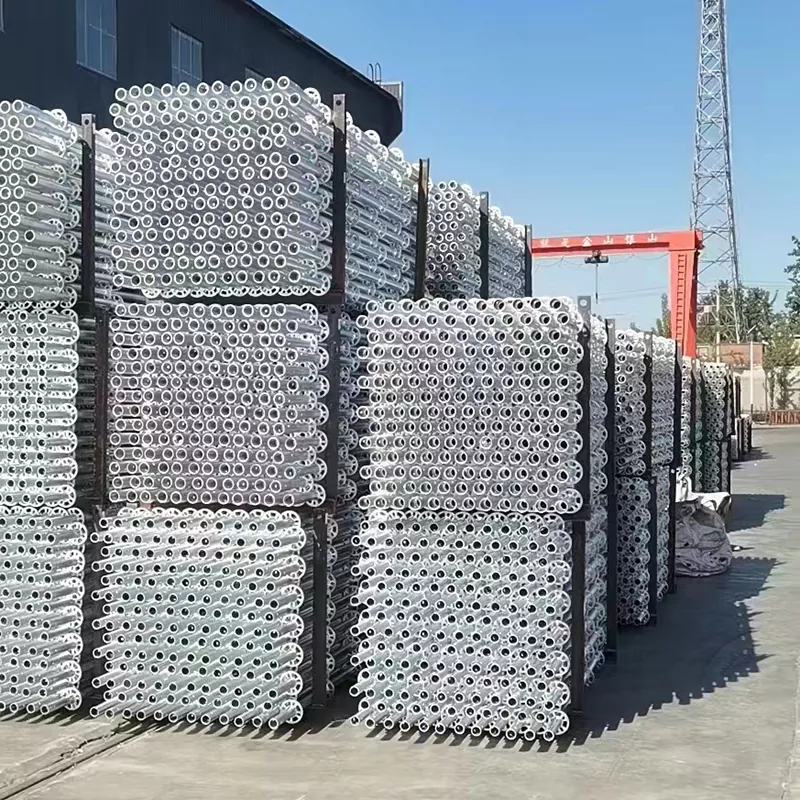
Galvanized or other anti-corrosion surface treatments can be useful in construction environments exposed to moisture, cement residue, dust, and repeated handling. The selected finish should match the product configuration and project requirements, while cleaning and storage remain important regardless of the chosen surface treatment.
Which Common Practices Should Be Avoided?
Most problems with temporary supports do not begin with a lack of theoretical strength. They often begin with an unsuitable application, poor installation discipline, overlooked damage, or a mismatch between the component and the actual temporary works design.
| Common practice | Why it creates concern | Better approach |
|---|---|---|
| Selecting by height alone | Height does not define load capacity, spacing, or support geometry. | Evaluate the complete temporary support condition. |
| Using damaged components | Deformation or thread damage can alter the intended behavior. | Inspect and remove questionable units from service. |
| Ignoring the base condition | An unstable or unsuitable bearing surface can compromise the load path. | Confirm the base is appropriate for the support reaction. |
| Forcing the adjustment mechanism | Abnormal resistance can indicate damage or contamination. | Stop and inspect rather than applying excessive force. |
| Adding improvised components | Unplanned substitutions can change alignment and contact behavior. | Use approved components and the defined installation method. |
| Assuming all locations carry equal load | Structural geometry and spacing may produce different reactions. | Use the project's structural and temporary works assessment. |
Avoid treating repeated use as unlimited use
Steel is durable, but a reusable component still experiences handling, adjustment, loading, unloading, storage, and environmental exposure. Reusability means the component can be returned to service after inspection and cleaning when it remains within the required condition. It does not mean every unit should be reused regardless of damage.
Avoid improvising the support arrangement
Temporary works can look simple because the visible component is familiar. The actual engineering condition may be more complex. When a slab, beam, wall, or prefabricated element requires temporary support, the arrangement should be based on the relevant structural assessment instead of being improvised around whatever equipment is immediately available.
Adjustable Support Versus Fixed-Length Members
Both adjustable and fixed support members have legitimate applications. The important question is which solution matches the working condition.
| Consideration | Telescopic adjustable support | Fixed-length support |
|---|---|---|
| Height flexibility | Can accommodate a defined working range. | Requires a member matched to the required dimension. |
| Site adjustment | Mechanical adjustment can be made during installation. | Adjustment is limited unless a separate connection or support method is used. |
| Reuse across different heights | Well suited to repeated applications within the specified range. | More dependent on the exact fixed dimension. |
| Storage and transport | Telescopic format can simplify handling compared with very long fixed members. | Longer fixed members may require more space depending on dimensions. |
| Design control | Requires attention to adjustment position, locking, and working range. | Simple geometry can be advantageous when the support dimension is constant. |
The comparison should not be interpreted as “adjustable is always better.” A fixed structural member can be appropriate when the dimension is known, stable, and incorporated into a defined temporary works arrangement. Adjustable support becomes particularly valuable when elevations vary or when the same support equipment needs to accommodate different site conditions.
How Does Temporary Support Fit Into Project Planning?
Temporary support should be considered at the planning stage rather than introduced only when a site problem appears. Good preparation connects the supported structure, support equipment, installation sequence, inspection procedure, and removal sequence into one controlled process.
Plan around construction stages
The support requirement may be different during formwork erection, concrete placement, curing, stripping, reinforcement work, prefabricated installation, and structural repair. Each stage can produce a different load condition and a different need for support.
Keep support records clear
When many adjustable props are deployed, simple records can improve control. Teams can identify product configurations, inspection status, installation zones, and removal timing. This is particularly helpful for rental or reusable equipment pools where props move repeatedly between projects.
Coordinate with the broader formwork system
Props rarely work alone. They may interact with formwork panels, beams, connectors, frames, bracing elements, or prefabricated components. The support arrangement should therefore be compatible with the complete temporary structure rather than considered as an isolated purchasing item.
Use product customization only when the requirement is defined
Non-standard dimensions can be useful for projects with unusual elevations or specific support conditions. However, customization should follow confirmed technical parameters. A clear specification helps align dimensions, adjustment range, support configuration, surface treatment, and installation requirements.
The product page for Construction Steel Prop covers standard height options, temporary support configurations, adjustable design, surface protection, and customization considerations for different construction conditions. These details are useful starting points when the site team needs to compare standard and project-specific support arrangements.
This planning approach also improves communication between procurement teams, engineers, site supervisors, and installers. Instead of asking only for “steel props,” the project can define what kind of support is needed, at what height, under which temporary condition, and with what configuration.
What Makes a Support Solution Practical on a Busy Site?
Construction equipment is practical when its design matches the pace and constraints of actual work. For temporary support, that often means a combination of straightforward adjustment, stable contact surfaces, manageable handling, repeatable installation, and inspection access.
A telescopic support is especially useful when one site contains multiple elevations. Instead of selecting a fixed member for every location, workers can adjust the same general support concept within its approved working range. This can simplify handling and make the support arrangement easier to standardize.
Surface protection also has a practical role. Construction environments expose steel components to rain, humidity, concrete residue, dust, and repeated handling. A suitable galvanized or anti-corrosion finish can help protect the steel surface, while cleaning and storage remain necessary for maintaining the adjustment mechanism and overall condition.
Another practical consideration is the ability to combine standard and customized configurations. Standard products can address common applications, while non-standard dimensions may be considered when the project has unusual geometry. The key is to keep customization tied to confirmed technical requirements instead of creating unnecessary variations.
From a system perspective, the best support equipment is therefore not simply the one with the largest nominal dimension. It is the one whose working range, configuration, mechanical details, and installation method fit the actual temporary support plan.
Key Points for Site Teams
- Treat temporary support as part of the structural load path, not as an isolated piece of equipment.
- Select the working range according to the actual site height and temporary support arrangement.
- Confirm the expected working load and support spacing before installation.
- Check both top and bottom bearing conditions carefully.
- Use proper locking components and do not force damaged adjustment mechanisms.
- Inspect used props before returning them to service.
- Coordinate temporary support with the complete formwork or structural system.
A well-controlled temporary support arrangement combines suitable equipment, correct positioning, verified load conditions, competent installation, and ongoing inspection.
Frequently Asked Questions
What is a Construction Steel Prop used for?
It is used as temporary adjustable vertical support for slabs, beams, formwork, prefabricated components, renovation work, structural reinforcement, and other construction-stage support conditions. The exact application depends on the project design and the working load.
How does an adjustable telescopic prop achieve different working heights?
The prop uses an inner and outer tube arrangement with a mechanical adjustment system. Coarse positioning is typically established through the telescopic section and locking component, followed by finer adjustment through the threaded mechanism or equivalent design.
Can one prop configuration be used for different construction areas?
A suitable adjustable range allows the same general prop type to be used at different heights within its approved working limits. The expected load, spacing, support geometry, and project conditions must still be checked for each application.
Are steel props suitable for repeated use?
Steel props are commonly designed for repeated use. After removal, they should be cleaned, inspected for deformation or damage, and stored properly. A reusable component should return to service only when its condition remains acceptable for the intended application.
What should be checked before installing a prop?
Check the tubes, adjustment mechanism, locking components, top plate, base plate, visible surface condition, and required configuration. The supporting floor or structural surface should also be assessed for suitability and stability.
Can adjustable props be customized for unusual dimensions?
Non-standard dimensions and configurations can be considered when the project has confirmed technical requirements outside standard options. The required height, load condition, support arrangement, and application should be defined before a customized configuration is selected.
Does a higher adjustable range automatically mean a stronger prop?
No. Working height and structural capacity are related but different considerations. As the support geometry changes, the relevant working condition also changes. The allowable load must therefore be confirmed from the actual product specification and temporary works design.
Which surface treatment is suitable for construction environments?
Galvanized or other anti-corrosion treatments may be appropriate depending on the product configuration and exposure conditions. The finish should be selected together with the intended environment, while cleaning and proper storage remain necessary for maintaining reusable equipment.
Why is support spacing important?
Spacing influences how temporary loads are distributed among support points. A change in the support layout can change the reaction carried by each individual prop. For that reason, spacing should follow the project's structural or temporary works assessment rather than a generic assumption.
A More Controlled Approach to Temporary Structural Support
Temporary support works best when product selection and site execution are treated as one connected process. The prop must have a suitable working range, an appropriate mechanical configuration, stable top and bottom contact, and a role that is clearly defined within the temporary support arrangement.
The same principle applies from the first specification review to final removal. Confirm the working height. Establish the temporary load condition. Review support spacing. Inspect the components. Install them according to the planned arrangement. Monitor the support during the relevant construction stage. Remove, clean, inspect, and store the equipment when the temporary condition has ended.
For projects requiring standard or customized temporary steel support configurations, Construction Steel Prop solutions can be evaluated according to working height, support arrangement, surface treatment, and the technical requirements of the application. This approach helps buyers and site teams focus on fit, configuration, and practical use rather than selecting equipment from a single specification point.
Need the Right Temporary Support Configuration?
Share the required working height, support application, adjustment range, configuration, and other confirmed technical requirements so the appropriate support solution can be evaluated for your construction conditions.
Contact usTechnical requirements should be confirmed before final selection and installation.